Monday, November 9, 2015

Color Theory/ Color Schemes

Color is the last element of art we will be covering. Color is produced when light hits and object and is reflected back to the eyes. Color is absolutely fascinating. The study of light and color makes us appreciate the magnificence of our Creator God!

The Color Wheel was developed by Sir Isaac Newton by bending the color spectrum into a circle. You may have heard it referred to as ROY G BIV, a simple acronym for Red, Orange, Yellow, Green, Blue, Indigo and Violet.

The color wheel is made up of 3 different types of color- Primary, Secondary and Tertiary.
Primary colors: Red, Yellow and Blue- simplest of colors, all colors are made from these three colors. You can not make these colors with any other colors. They are the simplest of forms.
http://illustrationfriday.com/wp-content/uploads/2013/04/OKGo-Colors.jpg
Secondary colors: Green, Orange, Violet- these are created by mixing equal parts of 2 primary colors.
Yellow+Blue=Green, Yellow+Red=Orange, Red+Blue=Violet

http://blog.logodesignguru.com/wp-content/uploads/2012/05/secondary-colors1.jpg
Tertiary colors: Tertiary colors are created by mixing equal parts of a secondary color and a primary color together.  There are six tertiary colors- red-purple, red-orange, blue-green, yellow-green, blue-purple, and yellow-orange. They should be noted with primary color first and secondary color second.

http://www.tricksyknitter.com/wp-content/uploads/2011/11/tertiarycolors.jpg


Monochromatic Color Scheme-any one color plus white (tint) and black (shade).
Tint-Color plus white
Shade- Color plus black
Complementary Color Scheme- Colors that are straight across from each other on the color wheel. Red/Green, Blue/Orange, Yellow/Purple
When you mix complementary colors you will make different types of browns.

Split Complementary: One color plus the two that sit on either side of its complement


Analogous: Three-four colors side by side on color wheel.


Jackson Pollock Journaling Bible

Jackson Pollock is an American painter that is/was well known for his outlandish technique. He is another Abstract Expressionism painter. Could you imagine if you became famous from dripping, slinging paint and getting messy? Did you know Pollock didn't even have a purpose behind how he slung the paint. You may here him called an action painter. Is this art? Why? Why Not?
Pollock Quotes:
 
The painting has a life of its own. I try to let it come through.
 
My painting does not come from the easel.
 

Monday, November 2, 2015

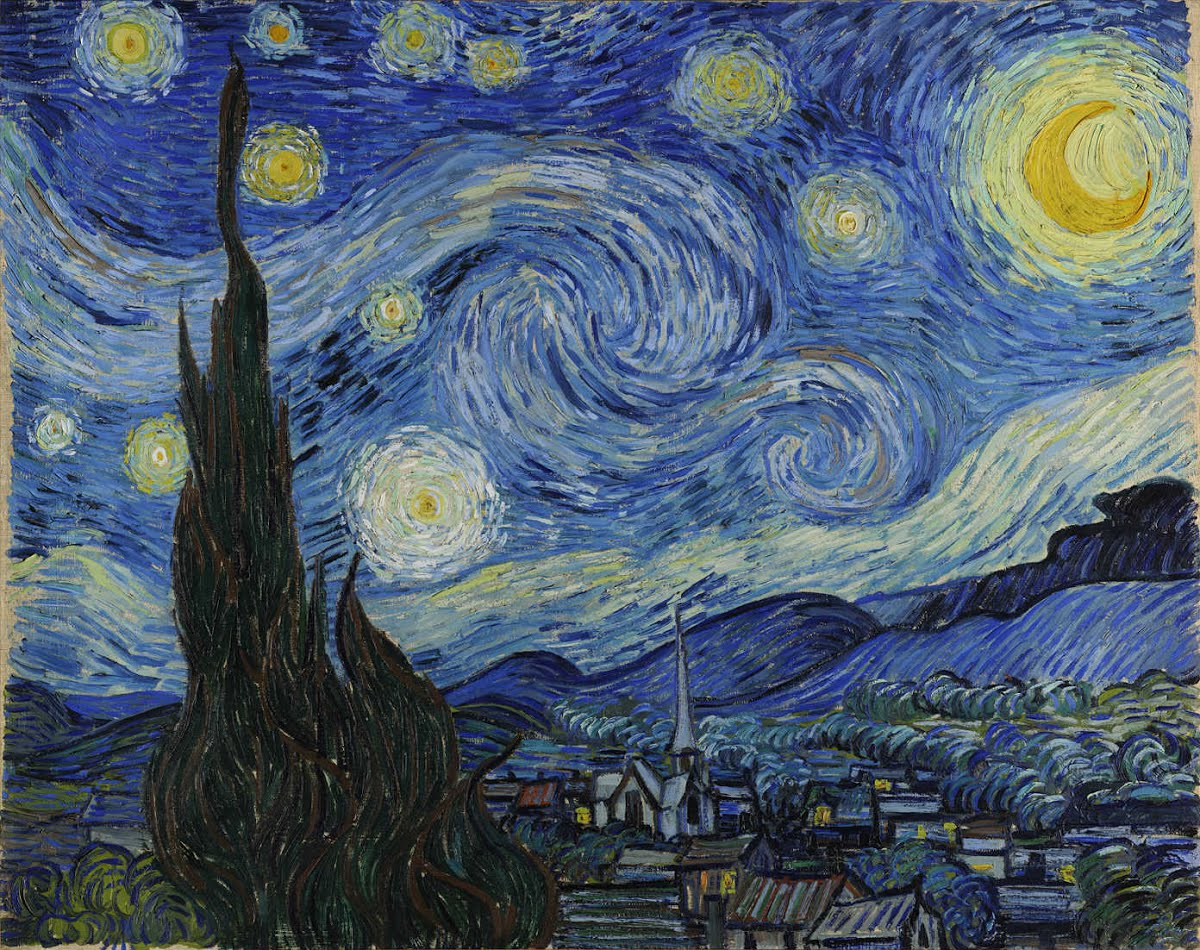
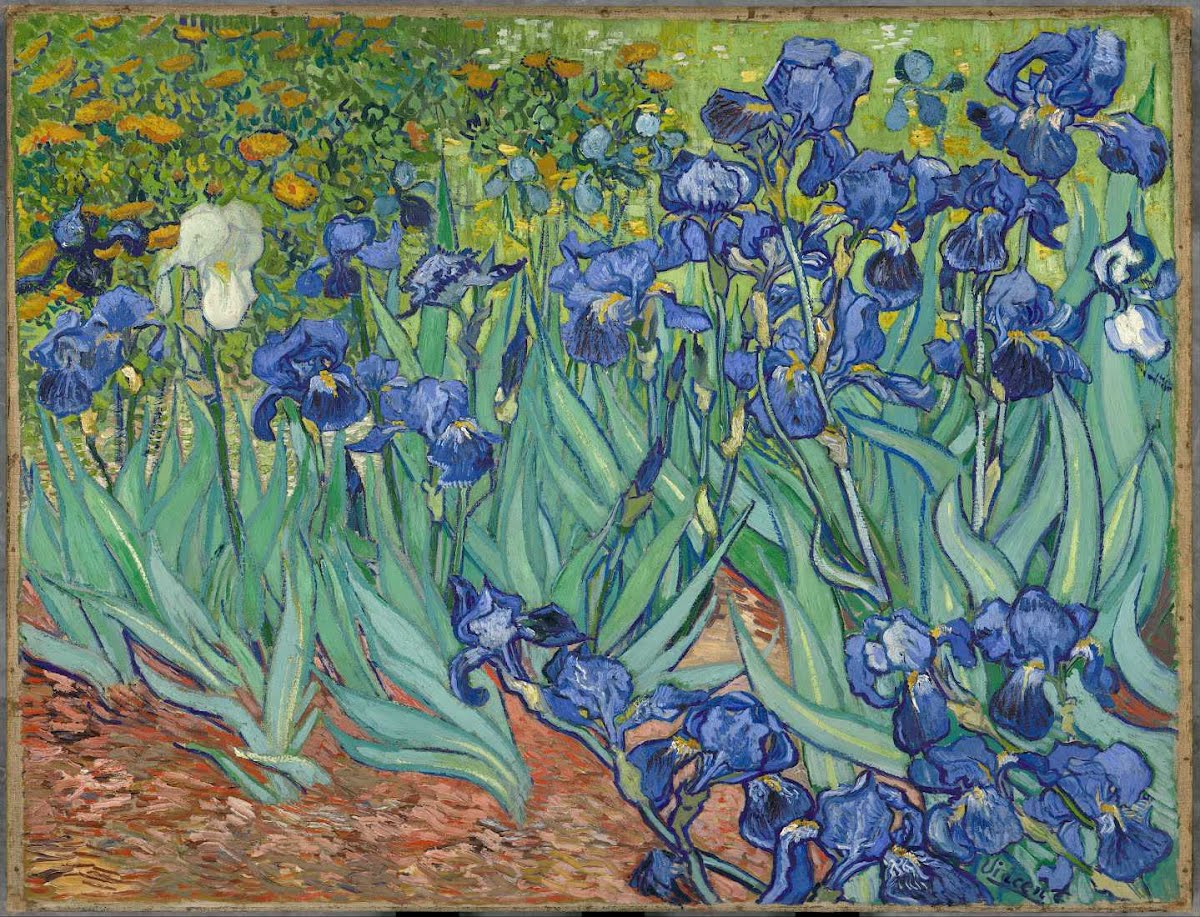
Van Gogh Journaling Bible

 
Starry Night 1889
 
Iris' 1889

1888
For this Journaling Bible Assignment please use Jeremiah 17:7- Our School's Verse! (page 841)
Create artwork inspired by Vincent Van Gogh.
Use paint or colored pencils.
7“But blessed is the one who trusts in the Lord,
    whose confidence is in him.
They will be like a tree planted by the water
    that sends out its roots by the stream.
It does not fear when heat comes;
    its leaves are always green.
It has no worries in a year of drought
    and never fails to bear fruit.”

Monday, October 26, 2015

Cardboard texture paintings

Let's use up some of the cardboard we have accumulated!

2D Cardboard Texture Art/Painting
Take a piece of cardboard and peel away parts of the top layer to reveal the corrugated texture. Leave some areas smooth for painting. First, lightly sketch your drawing then paint.

For this assignment you may choose any bird- Examples: owl, peacock, flamingo, parrot, duck, swan, blue jay, cardinal, dodo, puffin, any you can think of. The more colorful the better!


Matisse inspired journaling bible

James 1:17
Matisse is known for painting with paper. Use tissue paper or different colored papers or magazine clippings  to create your Matisse inspired design. Fill both margins but don't cover scripture!


Monday, October 19, 2015

Environmental Art, Mondrian Journaling Bible


What is Environmental Art?
Environmental Art is an art movement that emerged in the late 60's. You may have heard it called by a few other names- Earth Art, Eco Art, Earthworks or Land Art. Essentially the artist uses the landscape as part of their art. Some are small enough to fit in an art museum, but most are larger scale and become part of the environment. Environmental Art is made from natural materials found outdoors: dirt, leaves, stones/rocks/pebbles, sticks and seeds. Most of the art is ephemeral- it's made to disappear or transform.

Fall is a great season to use nature as your canvas. The leaves are beginning to change colors and it's starting to cool off.  Why not get outside? God has provided unlimited possibilities right outside your door.  
 Check out these environmental artists:
Andy Goldsworthy

Richard Shillings

Edith Meusnier

Tim Pugh
Land art

2014-2015 Student art 


Piet Mondrian (1872-1944)

Journaling Bible- Create a Mondrian inspired artwork in your journaling bible margins. Proverbs 16:3

Sunday, October 4, 2015

Cardboard 3d Sculpture Wrap up and new Journaling Bible assignment

We are wrapping up our sculptures this week.
Make sure your sculpture includes:
  • Texture
  • 99% natural cardboard 
  • Touches all sides of measuring box or is larger than box
  • Good Craftmanship- More cardboard then hot glue
  • Animal or Food
Comic Book (Pop Art) Journaling Bible Homework:
The Ben-Day Dots printing process, named after illustrator and printer Benjamin Day. Depending on the effect, color and optical illusion needed, small colored dots are closely-spaced, widely-spaced or overlapping. Magenta dots, for example, are widely-spaced to create pink. 1950s and 1960s pulp comic books used Ben-Day dots in the four process colors (cyan, magenta, yellow and black) to inexpensively create shading and secondary colors such as green, purple, orange and flesh tones.

Ben-Day dots were considered the hallmark of American artist Roy Lichtenstein, who enlarged and exaggerated them in many of his paintings and sculptures, especially his interpretations of contemporary comic book and magazine images. Other illustrators and graphic designers have used enlarged Ben-Day dots in print media for a similar effect. (sited)

http://uk.rendezvousenfrance.com/sites/default/files/sunrise.jpg
Sunrise, Lichtenstein, 1965

Sample of verse in bible


Fonts: